Impressum
Che cos'è Phaidra
Phaidra (Permanent Hosting, Archiving and Indexing of Digital Resources and Assets) è la piattaforma del Sistema bibliotecario di Ateneo per l'archiviazione a lungo termine di oggetti e collezioni digitali.
La piattaforma è multidisciplinare e ospita oggetti digitali di diverso genere, quali immagini, documenti di testo, libri e video, per lo più derivanti da digitalizzazioni di originali analogici. Le diverse tipologie di beni culturali rappresentate includono libri antichi, manoscritti, fotografie, tavole didattiche parietali, mappe, oggetti museali, materiale d'archivio, pergamene.
Questa eterogeneità di beni corrisponde ad un'eterogeneità di origini: il patrimonio culturale proviene da biblioteche (in particolare grazie ai progetti di digitalizzazione promossi dal Sistema bibliotecario di Ateneo), musei, archivi, centri e uffici dell'Università di Padova, dalle Università Ca' Foscari e IUAV di Venezia e da altre istituzioni cooperanti.
Phaidra accoglie il patrimonio culturale digitalizzato dall'utenza istituzionale dell'Ateneo e dalle istituzioni cooperanti e lo diffonde alla comunità scientifica e ai cittadini.
Contribuisce a promuovere le attività di Terza Missione culturale e sociale dell'università, ovvero la messa a disposizione di beni pubblici di natura sociale, educativa e culturale al fine di migliorare il livello generale di benessere della società.
Caratteristiche e servizi di Phaidra
Le principali caratteristiche e i servizi offerti da Phaidra sono:
Archiviazione a lungo termine di oggetti digitali (immagini, documenti di testo, audio, video, libri, collezioni, altri tipi di risorsa)
Descrizione e indicizzazione degli oggetti digitali
Ricerca per parole chiave e navigazione a faccette per il raffinamento dei risultati
Condizioni d'uso
Modelli di licenza applicabili agli oggetti digitali
Interfaccia utente bilingue (italiano e inglese)
Visualizzatore di immagini ad alta risoluzione
Creazione e visualizzazione di libri sfogliabili
Guide e strumenti di aiuto per l'utente
Chi può usare Phaidra
Chiunque può compiere ricerche e navigare tra le collezioni digitali archiviate e, quando non diversamente indicato, visualizzare e scaricare gli oggetti digitali.
L'archiviazione degli oggetti è riservata all'utenza istituzionale dell'Università di Padova, previa formazione, nonché a persone e istituzioni esterne che abbiano ottenuto le autorizzazioni necessarie. Per archiviare oggetti è necessario possedere un account Phaidra, da richiedere tramite il Servizio Aiuto del Sistema Bibliotecario di Ateneo, e accettare le condizioni d'uso.
Perché usare Phaidra
Ad ogni oggetto è assegnato un URL permanente Phaidra e un identificatore persistente (Handle) che ne consentono la citabilità
L'archiviazione di oggetti e collezioni digitali nella piattaforma ne consente la diffusione su larga scala migliorandone la fruizione e la valorizzazione
Offre la possibilità di organizzare gli oggetti – di vario formato e diversa provenienza – in collezioni virtuali e di collegarli tra loro tramite relazioni
Permette di assegnare una licenza d'uso a ogni oggetto singolo e di limitare la visibilità ai soli metadati
Risponde alle caratteristiche dei principi FAIR – Findable, Accessible, Interoperable, Reusable – indicate dalla Commissione europea nelle Guidelines on FAIR Data Management in Horizon 2020
È interoperabile con altre piattaforme di riferimento per il patrimonio culturale come Europeana
È certificata CoreTrustSeal
Sostiene i principi TRUST (Transparency, Responsibility, User focus, Sustainability, Technology)
Aiuto nell'uso di Phaidra
Phaidra offre una serie di strumenti di supporto per facilitare sia le operazioni di navigazione e ricerca sia quelle di archiviazione degli oggetti:
Pagina di Aiuto con spiegazioni su interfaccia, navigazione, personalizzazioni, creazione degli oggetti e guide stampabili
Servizio di help-desk, contattabile attraverso il Servizio Aiuto del Sistema bibliotecario di Ateneo
Seminari di formazione
Assistenza individuale
Cronistoria di Phaidra
Il progetto di Phaidra nasce nel 2008 all'Università di Vienna (https://rdm.univie.ac.at/phaidra-repository/).
Nel 2010 l'Università di Padova avvia una collaborazione per l'utilizzo e lo sviluppo di Phaidra. La Convenzione con l'Università di Vienna viene approvata il 23 febbraio 2010 dal Comitato Tecnico Scientifico del Centro di Ateneo per le Biblioteche (verbale della riunione n. 2/2010).
Tra il 2012 e il 2013, alcune collezioni di Phaidra vengono pubblicate su Europeana nell'ambito del progetto europeo Linked Heritage.
Dal 2014 l'Università Ca' Foscari e l'Università Iuav, di Venezia, pubblicano le loro collezioni digitali nell'installazione Phaidra di Padova.
Negli anni successivi anche altre istituzioni e associazioni hanno scelto di utilizzare Phaidra per le loro collezioni digitali, siglando appositi accordi con il Centro di Ateneo per le Biblioteche dell'Università di Padova.
Nel 2016 il Sistema Bibliotecario Padovano aderisce alla Confederation of Open Access Repositories – COAR, l'associazione internazionale delle istituzioni che gestiscono archivi digitali ad Accesso Aperto.
Nel 2019 Phaidra ottiene la certificazione CoreTrustSeal che garantisce l'affidabilità degli archivi digitali nel rispetto degli standard per la conservazione a lungo termine di dati e metadati.
Nel 2023 Phaidra è stata caso studio nell'ambito del progetto europeo A FAIR-enabling citation model for Cultural Heritage Objects, finanziato da EOSC Future e promosso dalla Research Data Alliance (RDA).
Nell'ottobre del 2025, Padova ha ospitato per la prima volta PHAIDRAcon, l'appuntamento annuale della comunità europea di utilizzatori di PHAIDRA, organizzato congiuntamente dalle Università di Vienna e Padova, con il coordinamento del Centro di Ateneo per le Biblioteche dell'Università di Padova.
Nel 2026, Phaidra è stata aggiornata a un nuovo modello tecnologico che ha comportato, in particolare, un significativo miglioramento infrastrutturale e l'adozione di un modello di dati basato sui Linked Open Data.
Nel 2026, il Centro di Ateneo per le Biblioteche ha dichiarato il proprio sostegno ai principi TRUST e Phaidra è entrata a far parte del FIDELIS Network of Trustworthy Digital Repositories (TDRs) come provisional member.
In ambito internazionale, Phaidra è utilizzata da oltre 20 istituzioni europee. Informazioni sui partner di Phaidra sono disponibili sul portale Phaidra.org.
Struttura organizzativa
Lo staff di Phaidra è formato da bibliotecarie, bibliotecari e informatici dell'Ufficio Biblioteca Digitale del Centro di Ateneo per le Biblioteche dell'Università di Padova e cura il mantenimento e lo sviluppo di Phaidra. Lo staff di Phaidra supporta il Sistema bibliotecario di Ateneo nei progetti di digitalizzazione e fornisce assistenza e consulenza alle strutture dell'Università di Padova e alle istituzioni cooperanti per l'archiviazione in Phaidra di oggetti e collezioni digitali.
Lo staff e i proponenti di un progetto di digitalizzazione interagiscono in tutte le fasi progettuali, dalla proposta di progetto all'analisi delle attività, dalla fase di avvio del progetto fino al suo completamento con l'archiviazione e la pubblicazione in Phaidra.
La partnership tra l'Università di Padova e l'Università di Vienna è mantenuta attiva attraverso una costante collaborazione e confronto, in particolare sotto l'aspetto dello sviluppo tecnologico.
La community internazionale di utilizzatori di Phaidra si ritrova annualmente nel contesto del convegno PHAIDRAcon, che prevede:
un incontro riservato ai partner Phaidra per la presentazione di aggiornamenti sulle attività in corso e la raccolta e condivisione di idee, suggerimenti, best practices e indicazioni per lo sviluppo futuro
una conferenza pubblica che approfondisce attraverso contributi di esperti, anche esterni alla comunità Phaidra, uno o più temi di particolare rilievo
PHAIDRAcon sostituisce dal 2020 le precedenti occasioni di incontro: Phaidra Annual Meeting (prima Phaidra Steering Committee) e Technical Meeting.
La comunità degli utilizzatori di Phaidra è inoltre attiva tramite un forum e una serie di incontri online periodici (Phaidra Community Call).
La partnership tra l'Università di Padova e le altre istituzioni cooperanti comprende la condivisione della piattaforma Phaidra con la pubblicazione delle collezioni digitali di tali istituzioni nell'installazione di Padova.
Metadati
A partire dal 2026 Phaidra adotta uno schema di metadati bibliografici modellato in RDF (Resource
Description Framework) secondo i principi dei Linked Data, garantendo l'identificazione univoca
delle risorse, l'esplicitazione delle relazioni semantiche e l'interoperabilità con altri grafi di
dati sul Web. I metadati sono espressi in JSON-LD, una serializzazione standard di RDF che
favorisce l'integrazione con le applicazioni web e lo scambio di dati. Molti campi utilizzano
descrittori provenienti da vocabolari controllati per la maggior parte disponibili nel Vocabulary Server di Phaidra.
Per una panoramica dei campi di metadati è possibile consultare la pagina Elenco dei campi dei metadati.
Gli oggetti digitali caricati prima del 2026 restano descritti secondo il modello di dati precedentemente adottato Universität Wien metadata (UWmetadata nella forma abbreviata), risultato dell'espansione dello standard Learning Object Metadata, LOM (1484.12.1-2002 IEEE Standard for Learning Object Metadata) e della combinazione fusionale di categorie ed elementi derivati o personalizzati di schemi di metadati diversi, e come tale collocabile tra gli esempi di profili applicativi LOM.
Specifiche tecniche
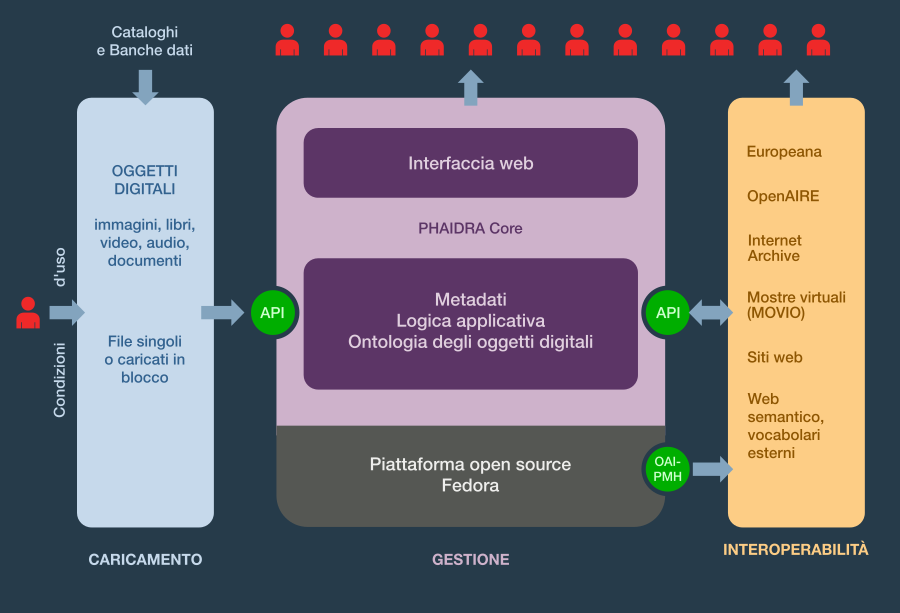
Phaidra si basa sul software open source Fedora, un'architettura modulare per la gestione delle risorse digitali su cui costruire archivi e biblioteche digitali, sia per l'accesso sia per la conservazione. È anche usato per fornire accesso specializzato a grandi collezioni digitali di materiali storici e culturali, nonché a dati scientifici.
Piattaforma tecnologica
Phaidra è costituita da una costellazione di software open source configurati per operare in modo coordinato. I componenti principali sono:
Fedora, "the flexible, standards-based, open-source repository software built to support long-term digital preservation", per conservare a lungo termine gli oggetti digitali
Phaidra API, che permette di accedere alle funzionalità della piattaforma in modo completo (REST), sicuro e programmatico
Phaidra UI, l'interfaccia web di Phaidra, disponibile in più lingue
Docker, il sistema flessibile di composizione e aggiornamento di applicazioni, che agisce da collante per la piattaforma
Autenticazione, LDAP, Shibboleth e altro, per avere la gestione degli utenti a portata di piattaforma
IIIF, 3D, video, audio, libri, testi e altri visualizzatori, per mostrare e agevolare il riutilizzo degli oggetti in Phaidra
OAI-PMH per la disseminazione in cataloghi e raccolte
Handle e DOI per dare una casa stabile agli oggetti digitali
Apache Solr per rendere facile e veloce la ricerca degli oggetti
Apache Tika per estrarre ulteriore contenuto dagli oggetti (es. full-text)
OCFL, un modello standard e riconosciuto per la rappresentazione digitale degli oggetti, adatto alla preservazione dentro e fuori Phaidra
Grafana, Prometheus e altri sistemi, per monitorare ed essere sempre informati in maniera semplice su quanto accade nella piattaforma
Una lista dettagliata delle tecnologie supportate e una descrizione dell'architettura generale sono disponibili alla pagina Architecture del portale Phaidra.org. Ulteriori dettagli si trovano nel repository GitHub di Phaidra.
Per una lista dettagliata dei servizi e delle modalità di accesso, si possono consultare le informazioni riportate nei registri re3data.org, FAIRsharing.org, OpenDOAR e COAR IRD.
Base URL OAI-PMH: https://phaidra.unipd.it/api/oai
Documentazione API REST: https://phaidra.unipd.it/api/openapi
Endpoint IIIF: https://phaidra.unipd.it/api/imageserver?IIIF=PID.tif/info.json